
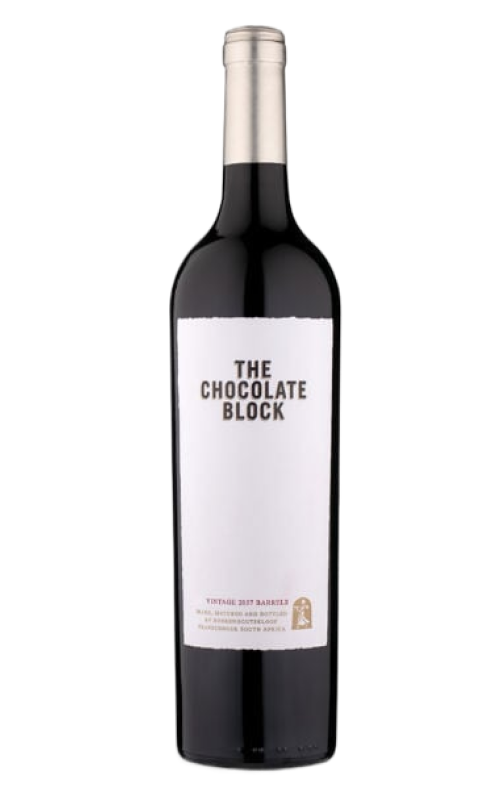
The Chocolate Block 2023 Magnum
Descrição
Parcelas «por descobrir» com um enorme potencial. Um trabalho meticuloso para obter um tinto com concentração de cor, sabor e estrutura tânica. A maior parte das vinhas de Syrah, Garnacha e Cinsault provém da região de Swartland, uma terra quente e árida onde as videiras criam raízes profundas no subsolo. A Cabernet Sauvignon provém de vinhas nas zonas de Franschhoek e da histórica Stellenbosch. Um vinho com muita personalidade.
Informações de produto
Prova
Vinha e preparação
Avaliação dos peritos
This top South African red blend consistently delivers. The 2023 vintage is 74 %Syrah, 11% Grenache, 8% Cabernet Sauvignon, 6% Cinsault and 1% Viognier, with 70% of the fruit sourced from Boekenhoutskloof’s Porseleinberg and Goldmine properties in Swartland. Savoury aromas of crispy bacon and an ashy, dried herb note sit alongside the bright black and blue berry fruit, with a perfumed hint of red cherry. The palate is very satisfying, with its savoury but silky dark fruit, with hints of red liquorice and bramble, all supported by supple tannins. Expansive but elegant, with lively acidity adding freshness. The long finish is laced with black spices and cherry. Aged in French barriques for 12-14 months; 4,043 barrels produced.
This is wonderfully fragrant, with attractive notes of olive, mulberry and peppercorn. It’s juicy, medium- to full-bodied and very bright, with fine-grained tannins and a lively finish. 74% syrah, 11% grenache, 8% cabernet sauvignon, 6% cinsault and 1% viognier. Delicious already. Drink now.
With an ample 1.2 million bottles made, the Boekenhoutskloof 2023 Swartland The Chocolate Block is one of South Africa's most popular restaurant and retail wines. The blend is 74% Syrah, 11% Grenache, 8% Cabernet Sauvignon, 6% Cinsault and 1% co-fermented Viognier. Eighty percent of the grapes are farmed by the in-house team. No new oak is used except for the Cabernet Sauvignon, and the rest sees neutral barrel. Proprietor Marc Kent says the wine is on its way to officially becoming organic. People underestimate the influence of the Cinsault, he says. It takes away from the roughness of the other grapes, and along with Grenache, creates a more perfumed style of wine. The Chocolate Block is its own brand, representing a fruit-forward, accessible and food-friendly red wine with medium-plus texture and pleasant softness.

Embora tenha existido como quinta desde 1776, foi apenas no início dos anos noventa do século XX que a Boekenhoutskloof iniciou o seu caminho até ao sucesso e à modernidade.


Colheitas: 2024 2023 2022 2021
Este vintage ainda não foi avaliado. Utilize a navegação abaixo para ver avaliações de vintages anteriores.
Seguramente uno de mis favoritos sudafricanos. Lo descubrí hace muchos años y recuerdo que me sorprendió lo untuoso y aterciopelado que es.
Bueno, sin más.
As usual an excellent wine. Deep and rich great finish. Expensive but worth it.
Muy rico, aunque no para todos los bolsillos
No tan redondo como parece, el color es intenso pero el sabor me recuerda a la garnacha con poca madurez del vino
Me ha gustado mucho. Intenso, complejo y elegante. Muy bueno
Cuesta más de lo que vale. RCP negativa.